
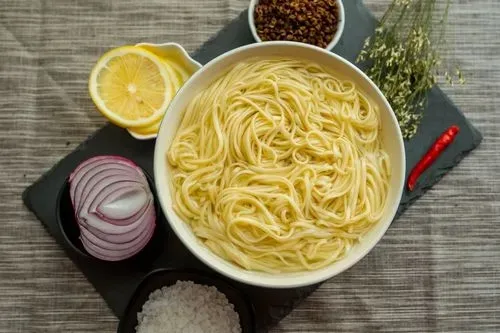
Food grade phosphates play a vital role in the grain and oil processing industry. In products such as noodles, steamed buns, dumplings, frozen dough and grain-based snacks, the right phosphate system can significantly improve texture, moisture, stability, and overall yield.
At Goway Chemical, we manufacture and supply high-purity STPP, SHMP, TSPP and SAPP for food applications. With ISO 22000, HACCP, Halal and Kosher certifications, we support food producers around the world in upgrading quality and consistency in grain- and oil-based products.
In this article, we look at how food grade phosphate works in noodles, quick-frozen buns, dumplings and grain-oil products, and how to select the appropriate phosphate grade for your application.
Phosphate Applications in Noodle Production
Enhancing Gluten Strength and Dough Elasticity
In wheat-based noodles, the gluten network is the backbone of dough strength and elasticity. Food grade phosphates such as Sodium Hexametaphosphate (SHMP) and Sodium Tripolyphosphate (STPP) help:
-
Strengthen gluten formation
-
Improve dough extensibility and resistance
-
Reduce tearing and breakage during sheeting and cutting
-
Provide a firmer, more elastic bite after cooking
By adjusting ionic strength and interacting with proteins, phosphates support a stronger, more stable dough matrix that can withstand mechanical processing and cooking.
Reducing Cooking Loss and Improving Noodle Stability
One of the challenges in noodle production is controlling cooking loss and stickiness. Excess starch leaching leads to cloudy cooking water and soft, clumped noodles.
Phosphates help:
-
Reduce starch dissolution into the cooking water
-
Keep strands separate and smooth on the noodle surface
-
Maintain shape and texture after boiling or rehydration
-
Improve stability for instant, fresh and semi-dried noodles
This is especially important for instant noodles and foodservice noodles that must tolerate holding and reheating.
Recommended Phosphate Types for Noodles
For noodle applications, the typical system includes:
-
SHMP – improves elasticity, bite and surface smoothness
-
STPP – enhances water binding, strength and yield
For more information on SHMP in food processing, see our article
Sodium Hexametaphosphate Application in the Food Industry.
Improving Quality in Quick-Frozen Steamed Buns and Mantou
Maintaining Softness and Moisture After Freezing
Quick-frozen steamed buns, mantou and filled buns often lose moisture or become dry and crumbly during frozen storage and reheating. Food grade STPP helps:
-
Bind water within the dough structure
-
Reduce moisture loss during freezing and thawing
-
Maintain softness, fluffiness and a fine internal crumb
-
Minimize cracking and surface defects
By stabilizing the starch–protein network and improving water distribution, phosphates make frozen dough products more resistant to temperature changes.
Supporting Dough Expansion and Uniform Structure
Proper dough expansion is important for volume and eating quality. Phosphates contribute to:
-
Uniform expansion during proofing and steaming
-
Better gas retention and volume
-
Smooth surface appearance and even cell structure
Combining STPP with a suitable leavening system can provide balanced dough strength and expansion.
Recommended Phosphate Types for Frozen Buns
For steamed buns and frozen dough products, common choices include:
-
STPP – improves moisture retention and softness
-
TSPP – offers buffering capacity and supports emulsification in complex formulas
To understand the functional role of food grade STPP in more detail, you may refer to
Food Additives and Sodium Tripolyphosphate – Truth Analysis.
Maintaining Freshness in Dumplings, Wontons and Stuffings
Water Holding Capacity and Freeze–Thaw Stability
Frozen dumplings, wontons and similar products rely on juicy fillings and stable wrappers. In meat- or seafood-based fillings, phosphates help:
-
Increase water holding capacity and reduce drip loss
-
Maintain tenderness and juiciness after cooking
-
Improve freeze–thaw stability during storage and distribution
-
Reduce syneresis and shrinkage in the filling
This is particularly important for export products and long cold-chain logistics.
Improving Wrapper Elasticity and Processing Performance
The dough wrappers of dumplings and wontons must be strong enough to be filled, sealed and frozen without tearing. Food grade phosphates assist by:
-
Enhancing dough elasticity and extensibility
-
Improving resistance to breakage during forming and packaging
-
Supporting color and surface smoothness
The combination of stable filling and robust wrapper leads to a more reliable finished product.
Recommended Phosphate Types for Dumplings and Fillings
Typical choices for dumpling systems include:
-
STPP – for meat and seafood fillings to enhance juiciness and yield
-
SHMP – for wrapper dough to improve elasticity and surface quality
For seafood-rich formulations, see
Sodium Tripolyphosphate Application in Aquatic Products.
Applications in Grain-Oil Products and Fried Snacks
Improving Texture and Reducing Oil Absorption
In fried snacks and coated grain-based products, phosphates contribute to:
-
A crisp and uniform texture
-
Reduced oil uptake during frying
-
More stable structure that resists collapse or sogginess
-
Improved eating quality over shelf life
By adjusting pH and interacting with proteins and starch, phosphates help form a better fry crust.
Supporting Color, Flavor and Oxidation Stability
In grain-oil and fat-rich systems, oxidation can lead to off-flavors and color deterioration. Certain phosphates act as buffering agents and stabilizers, helping:
-
Slow down oxidation reactions
-
Maintain desired color and flavor longer
-
Improve overall product stability during storage
Recommended Phosphate Types for Grain-Oil and Snack Products
Depending on formulation, processors often use:
-
SAPP – for controlled leavening and texture in baked snacks
-
STPP – for water binding and emulsification in complex grain-oil systems
For industrial and multi-purpose phosphate solutions, you can review
Industrial Sodium Tripolyphosphate
and
Sodium Tripolyphosphate’s Multiple Applications in Food Processing.
How to Choose the Right Phosphate for Grain and Oil Products
Selecting the right phosphate depends on your product type, processing method and target performance:
-
Noodles: focus on dough strength, elasticity and cooking stability
-
Steamed buns and mantou: focus on moisture retention, softness and volume
-
Dumplings and fillings: focus on juiciness, freeze–thaw stability and wrapper strength
-
Fried snacks and grain-oil products: focus on crispiness, structure and oxidation control
A simplified guideline is:
| Application | Recommended Phosphate | Main Functions |
|---|---|---|
| Noodles | SHMP + STPP | Dough strength, elasticity, cooking stability |
| Quick-frozen steamed buns | STPP / TSPP | Moisture, softness, volume |
| Dumpling fillings (meat/seafood) | STPP | Water holding, yield, freeze–thaw stability |
| Dumpling wrappers | SHMP | Elasticity, processing strength |
| Fried grain-based snacks | SAPP / STPP | Crispiness, reduced oil absorption |
If you are unsure which phosphate system fits your formula, our technical team can evaluate your recipe and processing conditions and recommend a tailored solution.
Why Food Manufacturers Choose Goway Chemical
Food producers choose Goway Chemical as their phosphate partner because we offer:
-
High-purity food grade phosphates (STPP, SHMP, TSPP, SAPP and blends)
-
ISO 22000, HACCP, Halal and Kosher certifications
-
Batch-to-batch consistency with full traceability
-
Technical support for new product development and production optimization
-
Flexible MOQ, usually from 1 ton for regular orders, with trial quantities available
-
Global logistics support for different regions and markets
We not only supply products, but also help customers translate phosphate chemistry into practical, reliable performance in grain and oil applications.
FAQ – Phosphate in Grain & Oil Products
1. How do I select the right phosphate for noodles, buns or dumplings?
The best phosphate depends on your raw materials and processing method. In general:
-
Use SHMP when you need stronger elasticity and a firmer bite in noodles or wrappers.
-
Use STPP when you need better water holding, juiciness and yield in fillings, buns or frozen dough.
-
Combine phosphates with the right leavening agents for bakery or steamed products.
You can share your formula and process with our technical team, and we will recommend a suitable phosphate system.
2. Do you provide COA, Halal, Kosher and other certificates?
Yes. All of our food grade phosphates are produced under strict quality and food safety systems. We provide:
-
COA (Certificate of Analysis) for each batch
-
Halal and Kosher certificates
-
ISO 22000 and related quality certificates
-
MSDS/SDS and Technical Data Sheets upon request
These documents help you meet regulatory and customer requirements in different markets.
3. What is your MOQ for food grade phosphates?
Our typical minimum order quantity is 1 ton for most food grade phosphates. For new projects or trial production, we can discuss more flexible quantities, especially when combined in mixed container shipments.
4. Can you provide technical support for grain and oil processing applications?
Yes. Our team has experience in applications such as noodles, steamed buns, dumplings, frozen dough and grain-oil snacks. We can:
-
Recommend appropriate phosphate types and ratios
-
Offer basic guidance on dosage ranges
-
Help you troubleshoot issues related to texture, moisture, or stability
Conclusion
Food grade phosphates are indispensable tools for improving quality, yield and consistency in grain- and oil-based foods. From noodles and steamed buns to dumplings and fried snacks, the right phosphate system can optimize dough performance, enhance texture, stabilize moisture, and extend shelf life.
If you are looking to upgrade your grain and oil products or explore new formulations, Goway Chemical can support you with reliable phosphate products, documentation, and technical guidance.
📩 Contact us at [email protected] or send an inquiry via our contact form to request samples, pricing and application support.
