
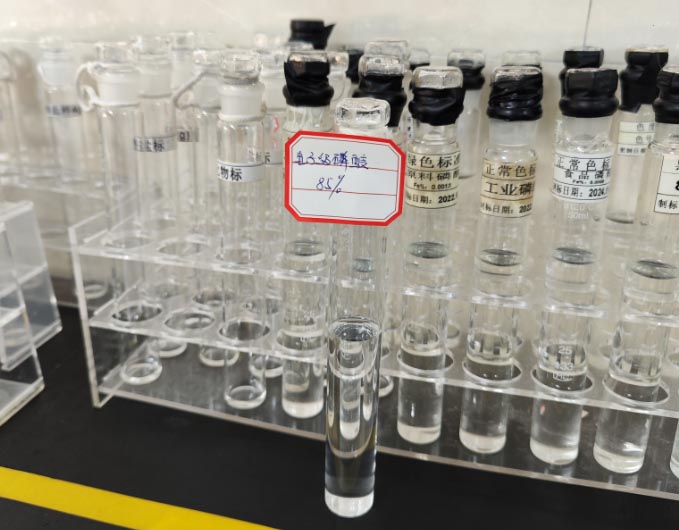
The rise of lithium iron phosphate (LFP) batteries has changed the strategic importance of phosphate production. What was once viewed mainly as a fertilizer and industrial-chemicals value chain is now increasingly tied to electric vehicles, grid storage, and energy-transition manufacturing.
For procurement managers, analysts, and engineers, the critical question is no longer just whether phosphate factories exist in the right regions. It is whether those factories can deliver the purity, traceability, and process control required for battery-related applications. That is where this guide focuses.
The Silent Enabler: Why Phosphate Factories Hold the Key to LFP Dominance
LFP batteries are often discussed in terms of safety, cost, and supply-chain resilience. But those advantages depend on upstream chemical execution. Battery-related phosphate quality does not begin at the cathode plant. It begins much earlier, in how the upstream phosphate factory controls purification, impurities, and consistency from raw feedstock to finished product.
This is why phosphate factories matter so much in clean energy. A buyer can qualify a precursor or cathode supplier only after trusting the upstream chain that supports it. For many projects, that means understanding how phosphate refining capability shapes quality, availability, and long-term supply confidence.
If you are new to the broader phosphate sector, our phosphates guide provides a useful overview of phosphate families, industrial applications, and how different products fit different value chains.
Decoding “Battery-Grade”: Specifications Beyond Purity
The term “battery-grade” is often used too casually. In practice, it should be understood as a package of requirements that may include purity, trace metallic impurities, process consistency, particle behavior, and traceability. Buyers should not assume that a single purity percentage tells the whole story.
A more useful sourcing approach is to evaluate not just whether the product looks technically acceptable, but whether the supplier can deliver the same profile repeatedly under commercial conditions.
Core parameter framework for battery-related phosphate sourcing
| Material / Parameter | Typical Sourcing Focus | Impact on Battery-Related Use | What Buyers Should Check |
|---|---|---|---|
| Purified phosphoric acid / phosphate identity | Correct grade and route fit | Determines whether the material is suitable for precursor pathways | COA, route description, customer qualification fit |
| FePO₄-related precursor quality | High purity, stable composition, suitable particle behavior | Influences conversion consistency and processing repeatability | Lot-to-lot comparison, PSD, XRD, internal test results |
| Metallic impurities such as Na, K, Ca, Mg, Al | Very low and tightly controlled | Can affect downstream electrochemical behavior and qualification risk | Detailed impurity panel, analytical scope, historical stability |
| Process-derived contamination | Stable control of trace contaminants from utilities or equipment | Creates hidden risk if not controlled consistently | Audit utilities, contact materials, line cleanliness |
| Foreign or magnetic contamination risk | Near-zero tolerance mindset | Important for manufacturing safety and defect prevention | Handling controls, screening logic, factory discipline |
From H₃PO₄ to FePO₄: why process route matters
Not all phosphoric-acid routes are equal from a battery-related perspective. Buyers should understand whether the supplier is working from a route that naturally carries a heavier impurity burden and what purification controls are in place to manage that burden. Route transparency does not require revealing proprietary know-how, but it does require enough clarity for the buyer to evaluate suitability.
How to read a battery-grade COA
A strong COA review should focus on three layers:
- Identity and main assay: is the material exactly the claimed product and grade?
- Critical impurity screen: are key metallic and process contaminants within the customer’s actual qualification window?
- Lot stability: does the supplier show repeatability across multiple lots rather than just one good batch?
Need help interpreting a phosphate COA for battery or energy-storage use?Our team can help you review supplier documents, compare impurity profiles, and align material specifications with your application requirements.
Mapping the Global Supply Chain: Nodes, Risks, and Strategic Sourcing
At the simplest level, the battery-related phosphate chain runs from phosphate rock to phosphoric acid or purified phosphoric acid, then to phosphate precursor streams, then to LFP cathode material and battery cells. For buyers, this means the real sourcing question is not only who can ship product today, but who can keep quality and supply stable as demand scales.
A useful way to read this chain is to separate it into four strategic layers:
- Resource layer: phosphate rock availability and upstream raw-material concentration
- Refining layer: acid purification and specialty phosphate conversion capability
- Precursor layer: conversion into battery-relevant intermediates
- Downstream layer: cathode, battery-cell, and energy-storage manufacturing
If you want a broader sector view, our phosphate industry page helps connect phosphate production with industrial trends, market structure, and downstream demand.
What buyers should watch in this supply chain
- Geographic concentration: some parts of the chain are more concentrated than others, especially in specialty refining.
- Environmental and regulatory pressure: higher-purity refining is sensitive to compliance, permitting, and utility cost.
- Energy and utility intensity: specialty phosphate processing depends on more than raw material cost.
- Supplier model choice: integrated players may offer stronger upstream control, while specialist refiners may offer more flexibility.
Integrated producer vs specialist refiner
| Supplier Type | Typical Strength | Typical Limitation | Buyer Evaluation Focus |
|---|---|---|---|
| Integrated producer | Stronger upstream coordination and potentially better raw-material visibility | May be less flexible for small-volume customization | Traceability depth, scale, long-term continuity |
| Specialist refiner | Potentially stronger niche purification or customer-specific support | May rely more heavily on external upstream inputs | Analytical capability, impurity control, responsiveness |
The Factory Audit Checklist: 7 Critical Points Beyond the Brochure
One of the most valuable ways to strengthen this page is to turn factory-level quality concepts into a real audit framework. A supplier brochure can sound impressive. A real audit reveals whether the site is actually ready for serious battery-related qualification.
- Raw-material traceability: can the plant trace each lot back to source feed or upstream acid batch?
- Route transparency: can the supplier clearly explain the production path and associated impurity-control logic?
- Dedicated or segregated production: are higher-purity lines separated from lower-grade industrial streams?
- Water, gas, and utility quality: are utilities controlled appropriately for high-purity chemical processing?
- Analytical capability: does the site have the equipment and know-how for trace-element control?
- In-process control frequency: are critical parameters monitored during production, not just at final release?
- Lot identity and deviation handling: can the factory show how off-spec lots are quarantined, investigated, and prevented from re-entering qualified supply?
Lead-generation opportunity:Turn this section into a downloadable asset with a PDF called 7-Point Battery-Grade Phosphate Factory Audit Checklist. This works well as a high-value lead magnet for battery, precursor, and energy-storage buyers.
Buyers who want a broader supplier-evaluation angle can also review our phosphate supplier guide for more screening logic that applies across industrial phosphate sourcing.
From Inquiry to Qualification: A Step-by-Step Sourcing Workflow
This is where the article should stop being only a technical explainer and become a decision tool. Instead of ending with a general “contact us” message, it should show buyers how to move from early interest to qualified sourcing with less risk.
Step 1: Define your requirement
Clarify the target material, annual volume, impurity limits, and whether the use case is laboratory testing, pilot scale, or commercial production.
Step 2: Screen candidate suppliers
Review manufacturing model, location, available grades, documentation depth, and evidence of quality systems that fit your application.
Step 3: Review documents and test samples
Collect COA, SDS, route description, and representative samples. Then run both chemical and application-side testing before advancing the supplier.
Step 4: Audit the factory
Validate traceability, segregation, utilities, analytical capability, and deviation handling either on-site or through a structured remote audit.
Step 5: Start with a controlled trial order
Before long-term commitment, confirm shipment quality, document consistency, response speed, and communication discipline under real commercial conditions.
Need a pre-screened shortlist of phosphate suppliers for your battery or energy-material project?We can help you narrow supplier options, review factory readiness, and align product documents with your target specification.
FAQ: Key Questions from Battery-Industry Buyers
What are the three most important indicators when evaluating whether a phosphate factory can support LFP-related supply?
The best three starting indicators are impurity-control capability, lot-to-lot consistency, and traceability. Those three factors usually tell buyers more than a headline purity claim alone.
Is battery-grade phosphate a universal specification?
No. Battery-grade qualification is usually customer- and process-specific. Buyers should evaluate whether the material fits the downstream route, impurity limits, and consistency requirements of their own application.
Why is purified phosphoric acid becoming strategically important?
Because clean-energy and LFP-related supply chains increasingly depend on upstream phosphate refining capability. As demand scales, the ability to secure purified phosphate streams becomes a strategic issue rather than a routine chemical purchase.
What should buyers ask for first?
Ask for a recent multi-lot COA set, a clear product-route description, analytical test scope, and confirmation of whether the line is dedicated or segregated for higher-purity production.
Conclusion
The real value of a phosphate factory in clean energy is not simply that it produces phosphate chemicals. It is that it can transform upstream resources into battery-relevant inputs with the purity, consistency, traceability, and scaling discipline that LFP and energy-storage supply chains increasingly require.
When this article frames phosphate production through that lens, it stops being a technical explainer and becomes a practical decision tool for buyers, analysts, and project developers. That is exactly what makes it more valuable in search, more useful in sales conversations, and more aligned with how clean-energy sourcing decisions are actually made.
