
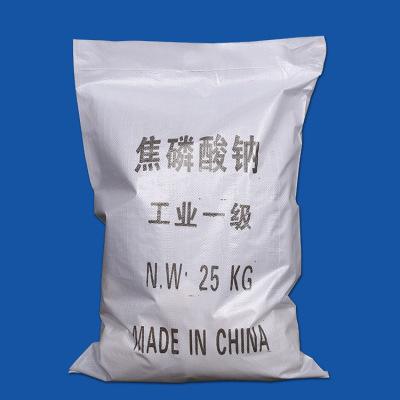
In many industrial formulations, Tetrasodium Pyrophosphate (TSPP) is treated as a familiar utility ingredient: a builder, a buffer, a sequestrant, a dispersant. That description is chemically correct, but commercially incomplete. For procurement teams, R&D managers, and plant operators, the real question is not only what TSPP does in theory. It is how a well-selected TSPP grade can help reduce total formulation cost, improve batch stability, and protect production efficiency.
This guide is built for three kinds of readers: procurement and supply-chain managers who need consistency and reliable delivery, R&D and formulation managers who need to balance cost, performance, and compliance, and plant operations teams who care about throughput, yield, and process stability.
Quick Access
Product specs:
Industrial TSPP Product Page | Industrial Cleaning & Detergents | Ceramic & Construction
Jump to:
TOC | 3 Value Pillars | Supplier Scorecard | Decision Framework | TSPP vs STPP | Next Step
Reading Shortcuts by Role
- Procurement / Buyer: Sections 2, 4, 6, 8, and 9 for sourcing logic, documentation, supplier screening, and next-step actions.
- R&D / Formulation Manager: Sections 3, 5, 6, and 7 for mechanism-to-value logic, application framework, and alternative comparison.
- Plant / Operations Manager: Sections 2, 3, 5, and 8 for process stability, yield protection, handling, and supply reliability.
- A buyer-oriented TSPP framework that translates chemistry into cost, risk, and process stability.
- A 7-factor procurement scorecard for screening suppliers beyond a simple purity claim.
- An application decision framework covering detergents, ceramics, metal cleaning, and alkaline systems.
- Clear next steps for samples, documentation review, or a deeper technical discussion.
1) The Formulator’s Dilemma: Balancing Cost, Performance & Compliance in Alkaline Systems
Industrial teams rarely evaluate TSPP in isolation. They evaluate it inside a system: a detergent builder package, a ceramic slurry, a metal-treatment cleaner, or another alkaline water-based process. In those systems, the challenge is always similar. The team needs enough hardness control, pH stability, and dispersion performance to keep the process reliable, but not so much cost or formulation complexity that the total program becomes hard to defend.
In practice, that means the real TSPP question is not “What is the CAS number?” or “What is the pH of a 1% solution?” The real question is whether a given TSPP grade will help the customer stabilize production, reduce hidden formulation costs, and support long-term procurement confidence.
2) Why Industrial Buyers Need to Care About TSPP Now
Today’s formulators and sourcing teams are under pressure from multiple directions: raw-material costs are volatile, end users expect stronger and more consistent performance, and some markets require tighter documentation and compliance support. In that environment, optimizing a multifunctional phosphate like TSPP is no longer a minor formulation tweak. It can become a high-leverage decision point in total-cost control and production stability.
The existing Goway resource article already gives strong technical coverage of TSPP identity, parameters, mechanisms, and dosage logic. The opportunity is to make that knowledge more useful to decision-makers by focusing on what the current TSPP product page already implies: stable quality, controlled impurity profile, flexible packaging, export support, and applicability across detergents, ceramics, metal treatment, and other water-based industrial systems.
Fast recommendation (buyer + formulator)
Share your application type, current formulation challenge, packaging requirement, and whether you are optimizing for cost, stability, or process efficiency. We’ll reply with a practical starting recommendation and the relevant TSPP document set.
3) The Three Pillars of TSPP Value: More Than Just a “Builder”
Pillar 1: Predictable Hardness Management
The cost saver. TSPP helps reduce hardness interference in alkaline systems by complexing Ca²⁺ and Mg²⁺. For the customer, that translates into more predictable detergent performance, less interference from hard water, and fewer hidden costs caused by unstable wash or process conditions.
Pillar 2: Process Stability & Yield Protection
The risk mitigator. In slurries, pigments, ceramic systems, and other particulate applications, stable dispersion and buffering support smoother production and lower batch variability. That can mean lower rework, more stable viscosity, and better throughput.
Pillar 3: Formulation Flexibility & Synergy
The innovator’s enabler. TSPP often works well with carbonate, silicate, zeolite, polymer, and other builder components. A supplier that understands these interactions can help the customer optimize the whole formulation, not just quote one raw material.
Pillar 1: Predictable Hardness Management (The Cost Saver)
The current technical article correctly explains that TSPP complexes calcium and magnesium and helps reduce insoluble salt formation in alkaline systems. In buyer language, that means TSPP can reduce the operating penalties caused by uncontrolled hardness. In detergent and cleaning applications, it helps stabilize cleaning logic and reduce redeposition-related problems. In other systems, it helps protect consistency where hardness would otherwise create interference.
Pillar 2: Process Stability & Yield Protection (The Risk Mitigator)
The existing sections on buffering, dispersion, and deflocculation are some of the strongest technical parts of the page. They should now be read through an operations lens. In ceramic slurries, pigments, and other particulate systems, stable dispersion is not just a chemistry feature. It is a yield-protection tool. Better slurry fluidity and less agglomeration can mean fewer unstable batches, lower rework risk, and more predictable plant behavior.
Pillar 3: Formulation Flexibility & Synergy (The Innovator’s Enabler)
One of the most commercially useful sections in the current article is the list of practical formulation pairings: carbonate, silicate, zeolite A, polycarboxylates, and bleach systems. That section should stay, but the framing should change. TSPP’s value is not only that it works by itself. Its value is that it often fits into a broader builder strategy, allowing formulators to balance performance against total-cost constraints.
4) The TSPP Procurement Scorecard: 7 Factors Beyond Purity
A nominal purity target may be necessary, but it is not enough. Serious buyers should screen TSPP suppliers using a broader scorecard that reflects what actually affects formulation quality, plant efficiency, and sourcing risk.
| Evaluation Factor | Why It Matters | What Buyers Should Check |
|---|---|---|
| Impurity-profile consistency | Lot-to-lot variation can affect appearance, clarity, and process stability | Multi-lot COA review, critical impurity consistency |
| Particle engineering | Particle size and flowability affect feeding, mixing, and caking | PSD, handling behavior, packing and storage fit |
| Dissolution kinetics | Slow or unstable dissolution can disrupt batching and clarity | Cold-water dissolution behavior, residue, mixing notes |
| Documentation depth | Stronger documentation speeds qualification and export workflows | COA, TDS, SDS, packaging details, compliance notes |
| Supply-chain transparency | Reliable production and logistics reduce procurement risk | Origin, packaging options, repeat-order support |
| Technical collaboration depth | Support can reduce trial-and-error in formulation work | Application advice, troubleshooting logic, response quality |
| Total cost-of-ownership logic | The cheapest product is not always the lowest-cost solution | Impact on dosage, process stability, rework, and handling efficiency |
Practical procurement view:
For most industrial buyers, a TSPP supplier is not truly “qualified” when they can only quote purity. A stronger supplier can also explain handling behavior, document support, packaging fit, application risk, and how the material behaves inside the customer’s actual process.
Lead-generation opportunity:Turn this section into a downloadable asset called TSPP Supplier Evaluation Scorecard and offer it as a PDF or self-assessment tool for buyers comparing suppliers.
5) Application Deep Dive: From Detergents to Ceramics — A Decision Framework
The existing article already includes useful dosage guidance. The next step is to make that guidance easier to use in real decision-making by organizing it around application questions rather than chemistry alone.
If your application is detergents or industrial cleaning
Start by asking: is hardness control the main problem, or is the bigger issue overall builder balance, pH stability, and anti-redeposition behavior? If the formulation is an alkaline detergent or I&I cleaner and the system needs a builder/dispersant/buffer that can work alongside carbonate, silicate, zeolite, or polymer systems, TSPP can be a strong option.
This is where the Industrial Cleaning & Detergents page becomes a strong internal link, because it already positions industrial phosphates around builder systems, hard-water control, and soil suspension.
If your application is ceramics or construction
The decision questions change: is slurry fluidity stable enough, is water demand too high for the target viscosity, and are agglomeration or settling hurting batch consistency? In these applications, TSPP’s dispersing and deflocculating value becomes more central. That makes the Ceramic & Construction application page and the TSPP product page natural reading paths.
If your application is metal cleaning or alkaline process treatment
The core questions are whether hardness is compromising the cleaner, whether pH stability matters, and whether the system needs a multifunctional builder rather than a single-purpose additive. This is where TSPP’s builder + buffer + dispersant logic can offer real value.
Formulation optimization insight:
Reducing TSPP from 8% to 6% may look like an easy cost saving, but if that change destabilizes hardness tolerance or dispersion, the real outcome may be higher total cost through rework, residue, or weaker performance. In some systems, partial replacement with a compatible polymer or complementary builder may preserve performance while lowering total cost, but only if the interaction is validated properly.
Need application-specific TSPP guidance?Share your formulation type, hardness level, current builder package, and main challenge. We can help you evaluate a realistic starting window and what to test first.
6) The Supplier Comparison Matrix: When to Choose TSPP, STPP, or Alternatives
The current article’s builder-alternative comparison logic is one of its strongest assets. Keep it, but make the buyer’s decision clearer up front.
Choose TSPP if…
- Your system runs alkaline and benefits from a balance of sequestration, buffering, and dispersion.
- You need compatibility with carbonate, silicate, zeolite, polymer, or other builder components.
- You want more than one function from the same ingredient.
Consider STPP if…
- You need stronger benchmark phosphate-builder performance where regulations allow.
- Hardness control is the main priority and the formulation logic favors STPP’s builder role.
Consider non-phosphate alternatives if…
- Regional phosphate limits require a lower-phosphate or phosphate-free route.
- You are prepared for greater formulation complexity or different cost/performance trade-offs.
For a related decision guide in another phosphate selection context, see our STPP vs SHMP for scale control article.
7) Recommended Related Reading
8) Tools & High-Value Assets
This page is a strong candidate for adding downloadable and interactive lead-capture tools. The most valuable assets would be:
TSPP Supplier Scorecard
Buyer-oriented screening checklist for evaluating industrial TSPP suppliers.
Suggested format: 3-page PDF or editable scorecard sheet Request Scorecard
Formulation Review Template
Structured input form for builder balance, hardness, dosage, and process KPIs.
Suggested format: editable PDF or intake form Request Template
TSPP Documentation Pack
COA sample, TDS, SDS, packaging details, and buyer-facing support notes.
Suggested format: gated ZIP or document pack Get Document Support
9) FAQ
Why should industrial buyers care about TSPP beyond purity?
Because purity alone does not determine performance in a real formulation. Buyers should also evaluate impurity consistency, particle behavior, dissolution speed, documentation depth, and supplier support.
When is TSPP a stronger choice than a generic builder?
TSPP becomes especially valuable when the formulation needs more than one function at once: hardness control, buffering, dispersion, and compatibility with other alkaline builder components.
What should procurement teams request before approving a TSPP supplier?
Teams should request a recent COA sample, TDS, SDS, packaging details, lot-consistency information, and enough application guidance to understand how the grade behaves in the intended formulation.
How should formulators compare TSPP with STPP or non-phosphate alternatives?
They should compare total formulation impact, not just unit price. The best choice depends on the required balance of hardness control, buffering, dispersion, regulatory limits, and compatibility with the rest of the builder system.
10) Choose Your Next Step
Different readers come to this page with different needs. Use the path that best matches your stage in the evaluation process.
I’m new and need a sample
Request a representative TSPP sample for formulation or process testing.
I’m evaluating suppliers
Get the TSPP documentation pack: COA sample, TDS, SDS, packaging, and support notes.
I have a difficult formulation problem
Book a technical discussion about builder balance, dispersion, or cost-performance optimization.
