
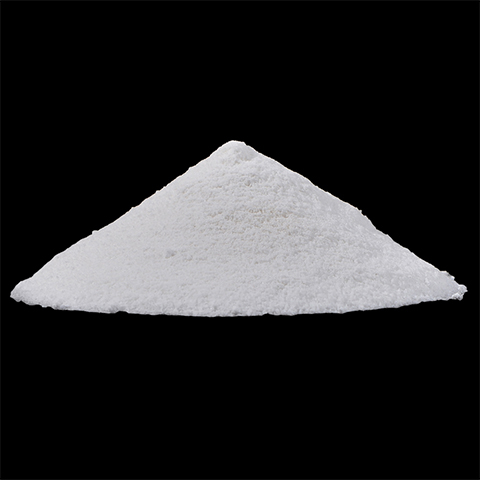
Industrial Grade | Total Phosphate (P₂O₅) ≥ 68%
The undisputed champion of scale inhibition and ion sequestration. From industrial boilers to textile dyeing, SHMP ensures your water works for you, not against you.
What is Industrial Grade SHMP?
Sodium Hexametaphosphate (SHMP), often simply called “Sodium Hexamet”, is a mixture of polymeric metaphosphates, of which the hexamer is one, commonly represented by the formula (NaPO₃)₆.
It is distinguished by its incredible ability to sequester Calcium and Magnesium ions—far superior to other phosphates. This makes it the standard-bearer for industrial water softening.
Technical Specifications (HG/T 2519-2007)
| Parameter | Standard Requirement | Goway Typical Value |
|---|---|---|
| Appearance | White Powder / Granule / Flake | White Fine Powder |
| Total Phosphate (as P₂O₅) | ≥ 68.0% | 68.5% |
| Inactive Phosphate | ≤ 7.5% | 5.0% |
| Iron Content (Fe) | ≤ 0.05% | 0.02% |
| pH Value (1% Solution) | 5.8 – 7.3 | 6.2 |
| Solubility | Soluble in water | High Solubility |
Key Industrial Applications
1. Water Treatment (Boilers & Cooling Towers)
This is SHMP’s primary battlefield. Hard water causes scale (calcium carbonate) buildup in pipes and boilers, leading to inefficiency and explosions.
- Scale Inhibition: It forms a soluble complex with Calcium ions, preventing them from precipitating onto boiler walls.
- Threshold Effect: A very small amount (ppm level) can prevent the precipitation of a large amount of calcite.
2. Paper & Textile Industry
In dyeing and papermaking, metal ions in water can ruin the color and texture.
- Textile Dyeing: Acts as a water softener to ensure bright, even dyeing results.
- Paper Coating: Disperses pigments (like Kaolin clay) to create smooth, high-quality paper surfaces.
3. Refractories & Ceramics
Used as a high-temperature binding agent and dispersant in refractory castables and ceramic slurries.
Need it for food processing (meat/drinks)? Please switch to our Food Grade SHMP (E452i) page.
Comparison: SHMP vs. STPP
Many buyers are confused: “Should I buy STPP or SHMP?” Here is the definitive breakdown.
| Feature | Sodium Hexametaphosphate (SHMP) | Sodium Tripolyphosphate (STPP) |
|---|---|---|
| P₂O₅ Content | High (≈68%) | Medium (≈57%) |
| Chelating Ability (Ca/Mg) | Very High (Best for hard water) | Moderate |
| pH Value | Weak Acid / Neutral (≈6.0) | Alkaline (≈9.5) |
| Stability | Hydrolyzes over time in water | Very Stable |
| Best Use | Water Treatment, Paint Dispersant | Detergents, Ceramic Slurry |
Troubleshooting: The “Hydrolysis” Risk
Unlike STPP, SHMP is sensitive. If you don’t store it right, it turns into useless Orthophosphate.
⚠️ Warning: Prevent Hydrolysis
The Problem: In aqueous solution, especially at high temperatures or low pH, the long chains of SHMP break down (hydrolyze).
The Solution:
- Storage: Keep the powder in a cool, dry place. Ensure the bag liner is sealed tight.
- Usage: When preparing a liquid solution, try to use it within 24-48 hours. Do not store liquid SHMP for weeks.
FAQ for Industrial Buyers
Is SHMP hazardous to handle?
Industrial grade SHMP is generally safe but can irritate dust. Wear a mask and gloves during handling. It is not flammable.
What is the chain length of your SHMP?
Goway Chemical’s SHMP is produced with an optimized average chain length (n≈12-14) to balance solubility and chelating power.
Can SHMP be used in Reverse Osmosis (RO) systems?
Yes, it is a very common antiscalant for RO membranes to prevent calcium sulfate and calcium carbonate scaling.
