
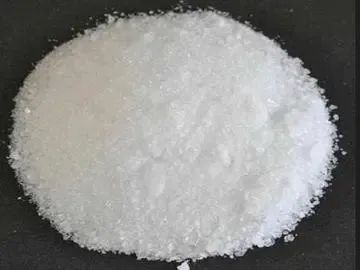
Monocalcium phosphate (MCP), chemically known as calcium dihydrogen phosphate, is an inorganic calcium phosphate supplied as anhydrous Ca(H₂PO₄)₂ or monohydrate Ca(H₂PO₄)₂·H₂O. In practice, it is used mainly as INS 341(i) in food processing, as a calcium–phosphorus source in feed, and as a phosphate-bearing material in agricultural systems. Selection is typically based on hydration state, calcium/phosphorus assay, pH behavior, and impurity limits rather than on chemical name alone.
For broader phosphate classification, see Phosphates Encyclopedia: Types, Chemistry & Industrial Uses.
Golden Definition
Monocalcium phosphate (MCP) (CAS 7758-23-8; monohydrate CAS 10031-30-8) is an acidic calcium phosphate used as a leavening agent, nutrient supplement, and calcium–phosphorus source. In food, it is identified as INS 341(i); in feed, it is selected for P availability, Ca content, and impurity control under grade-specific specifications.
For related food-phosphate applications, see Food Grade Phosphates: Functions & Applications.
Technical Parameters & Physical Properties
| Parameter | Value/Range | Test Method / Standard |
|---|---|---|
| Chemical name | Calcium dihydrogen phosphate | JECFA identity |
| CAS No. (anhydrous) | 7758-23-8 | JECFA |
| CAS No. (monohydrate) | 10031-30-8 | JECFA |
| INS No. | 341(i) | WHO/JECFA database |
| Molecular formula | Ca(H₂PO₄)₂; Ca(H₂PO₄)₂·H₂O | JECFA |
| Molar mass | 234.05 g/mol (anhydrous); 252.07 g/mol (monohydrate) | JECFA |
| Appearance | Hygroscopic white crystals, granules, or granular powder | JECFA |
| Assay (as Ca) | 16.8–18.3% Ca (anhydrous); 15.9–17.7% Ca (monohydrate) | JECFA food-additive specification |
| Solubility | Sparingly soluble in water; insoluble in ethanol | JECFA |
| Loss on drying | Monohydrate: ≤1.0% at 60°C, 3 h | JECFA |
| Loss on ignition | Anhydrous: 14.0–15.5% at 800°C, 30 min | JECFA |
| Typical feed-grade reference | P 22.7%, Ca 16.5%, pH 4–5 | Example commercial feed-grade sheet |
| Typical feed-grade solubility indices | 98% in 2% citric acid; 98% in alkaline ammonium citrate; 75% in water | Example feed-grade sheet |
When comparing calcium phosphate types, it is useful to read this page together with What is Dicalcium Phosphate (DCP)? Uses & Benefits and What is Tricalcium Phosphate (TCP)? Applications.
Working Mechanism & Chemical Behavior
- Acidic phosphate behavior
MCP is not a neutral calcium phosphate. It behaves as an acidic phosphate salt, which is why it is used in food systems that need acidity regulation, leavening, or controlled reaction with alkaline ingredients. - Leavening function in food systems
In bakery applications, MCP is selected because its acidic behavior allows it to react with bicarbonate-based systems. In practical formulation work, the suitability of MCP depends on reaction speed, moisture conditions, and final product pH, rather than on phosphate content alone.
For a related leavening phosphate system, see SAPP: The Baking Industry Standard Leavening Agent. - Calcium–phosphorus source in feed
In feed formulations, MCP is usually purchased for its available phosphorus and calcium contribution. A current feed-grade example sheet lists 22.7% phosphorus, 16.5% calcium, pH 4–5, and high citrate solubility, indicating why it is used in concentrates, compound feed, and mineral feed. - Hydration state affects handling
MCP may be sold as anhydrous or monohydrate material. This changes the formula weight and moisture-related specification basis, which is why LOD/LOI and the hydrate declaration matter in procurement. - Moisture sensitivity matters operationally
Because MCP is described as hygroscopic, storage conditions affect flowability, caking tendency, and assay on a dry basis.
For broader handling context, see Health & Safety Considerations for Phosphates.
Industrial Applications & Recommended Use Context
1. Food Processing
In food processing, MCP is used where an acidic phosphate is required, especially in dry blends and bakery systems. Its food additive identity is INS 341(i), and JECFA lists functions including leavening agent, acidity regulator, dough conditioner, texturizer, and nutrient supplement. This means food-grade MCP is selected by functional role plus impurity compliance, not by chemical identity alone.
Choose food-grade MCP when:
- the formulation requires an acidic calcium phosphate,
- the product must comply with INS 341(i),
- impurity limits such as fluoride, arsenic, and lead are part of the acceptance criteria.
For related food-use phosphate pages, see Food Grade Additives Guides.
2. Animal Feed
In feed, MCP is primarily a phosphorus and calcium source for compound feed, mineral feed, and species-specific nutrition programs. A representative feed-grade MCP sheet lists minimum phosphorus 21.7%, minimum calcium 15.5%, and maximum fluorine 2000 mg/kg, while another current product sheet lists P 22.7%, Ca 16.5%, pH 4–5, ash insoluble in 3N HCl <1%, and moisture <3%. These are the kinds of values buyers actually compare at RFQ and COA stage.
3. Fertilizer and Agricultural Systems
In agricultural contexts, MCP is better understood as a phosphate-containing calcium material rather than as a generic food additive. Selection is normally based on P or P₂O₅ economics, Ca contribution, impurity profile, and handling properties, not on INS status.
For fertilizer-side phosphate context, see What is Single Super Phosphate (SSP)? Fertilizer Guide and Phosphate Industry Trends & Analysis.
Safety Data, Storage & Regulatory Status
1. Food-Grade Regulatory Identity
WHO/JECFA identifies monocalcium phosphate as INS 341(i) and lists it under food additives with functions such as acidity regulator, leavening agent, sequestrant, texturizer, and nutrient supplement. JECFA also notes that it is included within the group MTDI of 70 mg/kg bw as phosphorus for phosphates, diphosphates, and polyphosphates.
2. Food-Additive Purity Limits
For food-additive specification purposes, JECFA sets the following key impurity limits:
- Fluoride: ≤50 mg/kg
- Arsenic: ≤3 mg/kg
- Lead: ≤4 mg/kg
These are stricter and more standardized than many industrial-grade acceptance criteria, so food-grade MCP should never be assumed to be interchangeable with non-food grades.
For users comparing phosphate safety across related materials, see Are Phosphates Bad for You? Safety & Nutrition Guide.
3. Storage and Handling
MCP should be stored sealed, dry, and cool to reduce moisture uptake and maintain handling properties.
Comparison: MCP vs. Common Alternatives
| Dimension | MCP | DCP | TCP |
|---|---|---|---|
| Chemical type | Acidic calcium phosphate | Calcium hydrogen phosphate | Tricalcium phosphate |
| Typical behavior | Acidic, reactive in leavening systems | More neutral calcium phosphate | Lower reactivity in many aqueous systems |
| Food role | Leavening / acidity regulation / nutrient supplement | Mineral source / processing aid | Anti-caking / mineral source / texture-related roles |
| Feed role | Ca/P source with high solubility indicators | Ca/P source with different assay and solubility profile | More application-specific |
| Procurement focus | INS 341(i), Ca assay, impurity limits, hydrate basis | Ca/P balance, impurity limits | Functional fit and physical properties |
Selection logic
- Choose MCP when acidic behavior is required, especially in bakery or food systems using INS 341(i).
- Choose MCP in feed when procurement is based on P/Ca contribution, citrate solubility, and fluoride control.
- Do not substitute MCP for DCP or TCP solely by name similarity; their functional behavior and selection criteria are different.
For direct comparison pages, see Dicalcium Phosphate (DCP) and Tricalcium Phosphate (TCP).
Frequently Asked Technical Questions
What is monocalcium phosphate?
Monocalcium phosphate is calcium dihydrogen phosphate, supplied as anhydrous Ca(H₂PO₄)₂ or monohydrate Ca(H₂PO₄)₂·H₂O.
Is monocalcium phosphate the same as INS 341(i)?
Yes. In food-additive classification, monocalcium phosphate is identified as INS 341(i).
What are the key food-grade impurity limits for MCP?
The main JECFA limits are fluoride ≤50 mg/kg, arsenic ≤3 mg/kg, and lead ≤4 mg/kg.
What is a typical feed-grade MCP specification?
A representative commercial feed-grade specification shows P 22.7%, Ca 16.5%, pH 4–5, water solubility 75%, 2% citric acid solubility 98%, and moisture <3%.
Why do MCP products show different CAS numbers?
Because MCP can be supplied as anhydrous or monohydrate material, and each form has its own CAS number and specification basis.
Technical Support & Sourcing
For procurement, the minimum useful request set is:
- grade: food / feed / agricultural
- hydrate form: anhydrous or monohydrate
- assay basis: Ca, P, or both
- impurity limits: fluoride, arsenic, lead, and feed-specific undesirable substances
- test basis: pH method, moisture method, LOI/LOD basis
- documents: COA, SDS, and grade-specific specification sheet
For commercial follow-up, the most relevant internal destination pages are:
