
The “Golden Definition” (Snippet Target)
Sodium tripolyphosphate (STPP) (CAS 7758-29-4) is an inorganic condensed phosphate (Na₅O₁₀P₃) used as a sequestrant/builder/dispersant in detergents, water treatment, and process systems, and as a regulated food additive (INS 451(i)). OEM supply typically differentiates by grade (food vs industrial), assay/P₂O₅, insolubles, pH (1% solution), particle size, and packaging. (goway chemical)
Technical Parameters & Physical Properties
| Parameter | Value/Range | Test Method/Standard |
|---|---|---|
| CAS No. | 7758-29-4 | ECHA substance identity (ECHA) |
| Molecular Formula | Na₅O₁₀P₃ (also written Na₅P₃O₁₀) | ECHA substance identity (ECHA) |
| Molar Mass | 367.86 g/mol (anhydrous) | FAO/JECFA additive monograph (FAOHome) |
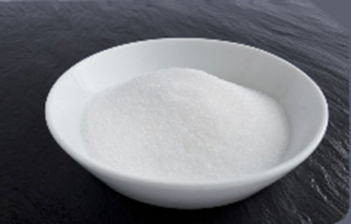
| Appearance | White powder or granular | Typical industrial TDS description (goway chemical) |
| Purity / Assay (industrial example) | ≥ 94.0% (as Na₅P₃O₁₀) | Industrial STPP TDS (typical; final values per batch COA) (goway chemical) |
| P₂O₅ content (industrial example) | ≥ 57.0% | Industrial STPP TDS (goway chemical) |
| pH (1% solution) | 9.2–10.0 | Industrial STPP TDS (goway chemical) |
| Water insoluble matter | ≤ 0.10% | Industrial STPP TDS (goway chemical) |
| Melting / Decomposition | ~622 °C (reported) | Product literature / SDS reporting basis (value may be described as decomposition) (goway chemical) |
| Density | 2.52 g/cm³ (reported) | Common SDS/property listings (check delivered grade) (ChemicalBook) |
OEM QC note: for B2B procurement, “typical TDS” values are not a substitute for lot-specific COA; acceptance criteria should reference the COA fields (assay, P₂O₅, insolubles, pH, moisture/impurities as applicable). (goway chemical)
Working Mechanism & Chemical Behavior
- Hardness sequestration (builder function)
In aqueous systems containing Ca²⁺/Mg²⁺, STPP reduces free hardness-ion activity by complexation, which improves surfactant efficiency and limits formation of insoluble salts. Performance depends on hardness load (mg/L as CaCO₃) and builder dose. (goway chemical) - Dispersion and anti-redeposition
In particulate soil or slurry systems, STPP can improve dispersion by limiting divalent-ion bridging and supporting electrostatic stabilization. The effect is conditional on ionic strength, pH, and solids loading. (goway chemical) - Buffering contribution under alkaline use conditions
Typical industrial STPP specifications show pH 9.2–10.0 (1% solution), indicating its role in supporting alkaline formulation windows when used with other alkalinity sources (carbonate/silicate/NaOH). (goway chemical) - Hydrolysis / chain-length sensitivity in aqueous handling
Condensed phosphates can undergo hydrolysis toward shorter-chain species under certain pH/temperature/residence-time conditions; therefore, OEM users often control storage moisture, batching order, and process pH to stabilize performance. (goway chemical)
Industrial Applications & Recommended Dosage
1. Detergents (Household & I&I) — Builder and Water Softening
- Function: hardness sequestration, improved detergency, reduced redeposition. (goway chemical)
- Typical formulation window: 5–25 wt% STPP in built powder detergents (range varies with regulations, hardness profile, and co-builders). (goway chemical)
- Conditions to specify in briefs: target hardness (mg/L as CaCO₃), wash temperature, and desired ash/film performance; verify via standardized performance tests. (goway chemical)
2. Ceramics & Construction Materials — Deflocculation / Rheology Control
- Function: dispersant/deflocculant to reduce viscosity at fixed solids loading (site-specific). (goway chemical)
- Trial dosage window: 0.05–0.30 wt% on dry solids for initial rheology screening; finalize via viscosity curve vs dose and ionic background. (goway chemical)
3. Water Treatment / Industrial Process Water — Softening and Scale Tendency Control
- Function: hardness control/conditioning in certain process-water programs where phosphate-based sequestration is used (program-dependent). (goway chemical)
- Typical dosing approach: set by water chemistry and compliance constraints; validate using scale indices, deposit monitoring, and corrosion strategy (site-specific). (goway chemical)
4. Food Processing (Food Grade STPP; INS 451(i)) — Functional Additive Use
- Regulatory identity: STPP is listed as INS 451(i) with FAO/JECFA specifications; Codex GSFA is a reference point for permitted uses/conditions by category. (FAOHome)
- Process-use ranges: application-dependent; practical ranges for meat/seafood processing and calculation examples are typically defined in technical guides and must comply with local rules and customer specs. (goway chemical)
5. OEM Customization Items (Supply-Side Deliverables)
OEM STPP programs are commonly differentiated using the following control levers (each should be written into the RFQ and verified by COA + inspection):
- Grade selection: food grade vs industrial/detergent grade. (goway chemical)
- Key QC gates: assay (as Na₅P₃O₁₀), P₂O₅, pH (1%), insolubles, Fe and other impurities as needed. (goway chemical)
- Physical form: powder vs granular; particle size distribution and bulk density to match spray-dried vs dry-mix processes (handling/segregation/dusting control). (goway chemical)
- Packaging & labeling: bag size, palletization, and labeling fields aligned to destination market requirements (identity, batch/lot, net weight, storage). (goway chemical)
Safety Data, Storage & Regulatory Status
- Documentation set typically required in B2B trade: SDS, TDS/spec sheet, and batch COA (minimum), with additional food-grade compliance documents when applicable. (goway chemical)
- Food additive specification anchor: FAO/JECFA monographs provide compositional criteria (e.g., minimum Na₅O₁₀P₃ and P₂O₅ ranges) for INS 451(i). (FAOHome)
- EU identity anchor: STPP appears in ECHA substance datasets (CAS 7758-29-4), supporting traceability and compliance mapping. (ECHA)
- Storage controls (industrial handling): manage as a moisture-sensitive inorganic salt; keep sealed and dry to reduce caking and preserve flowability. (Use the SDS/TDS for the delivered grade for detailed conditions.) (goway chemical)
Comparison: STPP vs. Common Alternatives
| Dimension | STPP (Na₅P₃O₁₀) | Zeolite A + polymer | Sodium carbonate (Na₂CO₃) | Sodium citrate |
|---|---|---|---|---|
| Cost efficiency | Often favorable per performance where permitted | Competitive in powders; polymer required | Low raw material cost | Often higher cost per hardness capacity |
| Performance in hard water | Strong builder + sequestration; supports detergency | Strong Ca²⁺ removal (ion exchange); redeposition control depends on polymer | Can cause CaCO₃ precipitation without support | Moderate chelation; may require higher dose at high hardness |
| Environmental / regulatory | Phosphate discharge constraints vary by region/use | Non-phosphate | Non-phosphate | Non-phosphate |
| Stability | Stable salt; moisture control needed | Stable | Stable; alkalinity constraints exist | Stable; electrolyte load can affect liquids |
| Compatibility | Broad with anionic/nonionic systems; QC gates available | Best for powders | Broad; filming risk in hard water | Broad; performance depends on hardness |
Selection guide
- Choose STPP when: hard-water robustness and builder function are primary, and phosphate use is permitted in the target market; specify COA gates (assay/P₂O₅/pH/insolubles) to control performance variability. (goway chemical)
- Choose zeolite + polymer when: phosphate-free powders are required and you can validate redeposition/ash via testing. (goway chemical)
- Choose carbonate/citrate when: non-phosphate positioning is required and the formulation can be tuned to meet filming and cleaning targets under the local hardness profile. (goway chemical)
Frequently Asked Technical Questions
Q1: What is the minimum set of COA parameters to qualify industrial STPP for detergent use?
Assay (as Na₅P₃O₁₀), P₂O₅, pH (1% solution), insolubles, and key metals (e.g., Fe) are commonly treated as baseline gates, because they correlate with builder activity and residue risk. (goway chemical)
Q2: How is “food grade STPP” anchored for compliance screening?
Food-grade STPP is typically referenced as INS 451(i) with FAO/JECFA specifications, and Codex GSFA provides category-based use provisions adopted by Codex. (FAOHome)
Q3: Why do particle size and bulk density matter in OEM STPP supply?
They affect dusting, dissolution rate, segregation in blends, and packing density, so OEM programs often specify physical form (powder/granular) and handling metrics to match the customer’s process. (goway chemical)
Q4: Is the pH value of STPP fixed across suppliers?
No—pH is a specification item measured on a defined basis (commonly 1% solution) and should be confirmed on the delivered grade’s COA/TDS (e.g., industrial example pH 9.2–10.0). (goway chemical)
Q5: What dosage range is commonly used for STPP in built powder detergents?
A commonly cited engineering window is 5–25 wt% (finished product), but the effective level depends on local phosphate constraints, hardness, and co-builders; performance testing is required. (goway chemical)
Technical Support & Sourcing
For detailed COA, SDS/MSDS, and OEM customization (grade selection, assay/P₂O₅ targets, insolubles limits, particle size/bulk density, and packaging), contact a technical engineering team.
Request Technical Datasheet / Contact Engineering Team
