
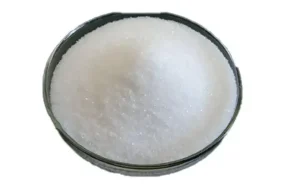
Technical Parameters
| Parameter | Typical Value / Description | Test Method / Reference Basis |
|---|---|---|
| Topic scope | Industrial sodium phosphate process | Source article reference |
| Core process stages | Raw-material preparation, reaction, crystallization, washing, drying, screening | Source article reference |
| Raw materials mentioned on source page | Sodium chloride, sodium phosphate, sodium sulfate | Source article reference |
| Product-quality focus | High raw-material purity and controlled processing | Source article reference |
| Output form | Dried product with different particle sizes | Source article reference |
| Relevant industrial sodium phosphate products on site | STPP, TSPP, SHMP | Product / category references |
| Example industrial STPP assay | 94.0% min | Industrial STPP product page |
| Example industrial STPP pH (1% solution) | 9.2–10.0 | Industrial STPP product page |
| Example industrial STPP P2O5 | 57.0% min | Industrial STPP product page |
Working Mechanism
- Raw-material consistency defines process stability.
The production article states that sodium chloride, sodium phosphate, and sodium sulfate are proportionately mixed before reaction, and it explicitly emphasizes the importance of raw-material quality. In practical industrial terms, feed consistency affects reaction completeness, impurity load, filtration behavior, and final product uniformity. - Reaction converts the feed into the target sodium phosphate phase.
The mixed materials are introduced into a reactor and heated under controlled conditions to form the target phosphate product. Temperature control, residence time, and feed ratio are key factors influencing conversion efficiency and batch repeatability. - Crystallization separates usable product from the mother liquor.
The process description includes gradual cooling to induce crystallization. Cooling rate, supersaturation behavior, and impurity profile can influence crystal size, filtration efficiency, washing performance, and downstream drying load. - Washing and drying reduce residual impurities and moisture.
After crystallization, the material moves through washing and drying steps. From a quality perspective, washing reduces surface impurities, while drying supports storage stability and downstream packaging performance. - Screening determines commercial particle-size range.
The final step includes filtration or screening into different particle sizes. This matters because industrial buyers often choose powder or granular grades according to process needs. For a downstream example, see industrial sodium tripolyphosphate STPP.
Applications and Typical Use Logic
1. Detergent and industrial cleaning formulations
A large share of industrial sodium phosphate demand is application-driven rather than process-driven. On Goway’s site, industrial STPP is positioned as a detergent builder that supports hardness sequestration, soil suspension, and formulation efficiency in cleaning systems. For broader use context, see industrial cleaning and detergents.
2. Ceramic and construction processing
Industrial phosphates are also used in ceramic systems as dispersants or deflocculants. Goway’s industrial phosphate pages present ceramic slurry control as a major application, and the site also maintains a category page for ceramic and construction applications.
3. Water-treatment chemistry
Industrial phosphate production is relevant to water-treatment programs where sequestration and scale-management functions matter. Goway’s industrial product pages describe sequestrant and dispersant roles in industrial water treatment and connect this use case to water treatment solutions.
4. Product-family context: STPP, TSPP, and SHMP
From a site-architecture perspective, industrial sodium phosphate becomes more useful when connected to clearly defined commercial products such as industrial TSPP and industrial SHMP, each serving different formulation roles across detergents, ceramics, water treatment, and broader process chemistry.
Safety and Quality Control
The production article emphasizes high raw-material purity and careful process control, which is the correct starting point for industrial-phosphate quality management. On the commercial side, Goway’s industrial STPP page adds practical procurement controls such as assay, P2O5, water-insoluble matter, iron, pH, and particle-size specification. For general support content, the site also provides health and safety considerations.
- Review raw-material purity before batching.
- Control reaction temperature and residence time.
- Maintain crystallization and washing consistency.
- Verify final moisture and particle-size range.
- Confirm batch COA, SDS, and TDS before dispatch.
Comparison: Process Overview vs Downstream Product Pages
| Process / Product View | General Industrial Sodium Phosphate Process | Industrial STPP | Industrial TSPP | Industrial SHMP |
|---|---|---|---|---|
| Site role | Process overview | Clear downstream product page | Clear downstream product page | Clear downstream product page |
| Main value | Explains how sodium phosphate materials are produced | Detergent, ceramic, water-treatment use | Industrial functional phosphate use | Sequestration, dispersing, and process use |
| Specification clarity | General | High | Product-specific | Product-specific |
| Buyer usefulness | Good for education | High for procurement | High for procurement | High for procurement |
This comparison highlights the main limitation of a generic process article: it explains production logic, but commercial intent becomes stronger when that logic is connected to concrete product pages. Product-specific pages such as STPP, TSPP, and SHMP are easier for buyers to classify by application, specification, and procurement relevance.
Frequently Asked Questions
What does industrial sodium phosphate production include?
It typically includes raw-material preparation, controlled reaction, crystallization or phase formation, washing, drying, and final size classification.
Why is raw-material quality important in sodium phosphate production?
Because feed purity affects reaction efficiency, impurity carryover, crystallization behavior, and final product stability.
Why does particle size matter for industrial sodium phosphate?
Because industrial buyers often select powder or granular grades depending on process handling, dissolution rate, mixing behavior, or downstream equipment needs.
Which products best represent industrial sodium phosphate on this site?
The clearest downstream examples are industrial STPP, industrial TSPP, and industrial SHMP, all listed under the industrial chemicals category.
What documents should industrial buyers request before ordering?
Buyers should request COA, SDS, TDS, grade confirmation, particle-size information, packaging details, and shipment terms before purchase.
Technical Support and Commercial Inquiry
For procurement or technical evaluation, request the current specification, batch COA, SDS, TDS, available particle-size options, and packaging details through the contact page.
If your use case is detergent, ceramic, or water-treatment related, include the application, target specification, packing preference, and destination port so the recommendation can be matched to the product family and shipment plan.