Stop Scale & Corrosion in Cooling Towers and Boilers — with the Right Phosphate

Goway’s industrial-grade STPP, SHMP, and TSPP deliver precise scale inhibition, metal passivation, and pH buffering — tailored to your water chemistry and system type.

New guide: Compare STPP vs SHMP as scale inhibitors for cooling towers & boilers →
Qequest Water Treatment Technical Guide Get Dosage Recommendation (WhatsApp)

The Real Cost of Poor Water Treatment

Scale and corrosion are not “maintenance issues” — they are predictable performance losses that hit energy, uptime, and asset life.

  • Uncontrolled CaCO3 scale: 1 mm thickness can drive ~10% more energy use in heat exchangers (insulation effect).
  • Corrosion leaks: unplanned shutdowns can cost $15,000/hour in downtime (industry estimates used by regulators/plant operators).
  • Proper phosphate treatment: can extend equipment life by 5–8 years when combined with correct monitoring and discharge management.

If you need help choosing between SHMP and STPP for your water analysis, start here:
STPP vs SHMP scale inhibitor guide.

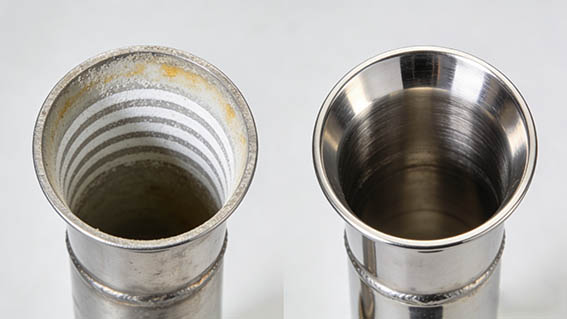
Scale buildup vs treated pipe (with vs without phosphate additive)

Infographic: Scale buildup vs treated pipe — With vs. Without phosphate treatment

How Our Phosphates Work in Water Treatment

Water treatment performance is chemistry-driven. Use SHMP for threshold inhibition at ppm-level, STPP for sequestration of trace metals and fouling control, and TSPP for buffering and corrosion protection in closed loops.

shmp-scale-inhibitor-threshold-effect-icon

SHMP (68%) — The Scale Inhibitor

Best for: high-hardness cooling water, RO antiscalant programs.
Mechanism: “threshold effect” at 2–10 ppm helps prevent CaCO3 nucleation and growth.
Tip: often works synergistically with phosphonates (confirm system chemistry & discharge limits).

View SHMP specs →

stpp-sequestering-agent-water-treatment-icon

STPP — The Sequestering Agent

Best for: boiler feedwater where iron/manganese and trace metals drive fouling/red water.
Mechanism: binds metal ions → reduces discoloration and metallic fouling.
Note: can hydrolyze to orthophosphate over time → monitor residuals and dosing control.

View STPP specs →

tspp-corrosion-buffer-closed-loop-icon

TSPP — The Corrosion Buffer

Best for: closed-loop systems (HVAC, glycol).
Mechanism: supports protective phosphate film formation and helps maintain pH 8.5–9.5 window.
Tip: closed loops still need monitoring — confirm compatibility with glycols and inhibitors.

View TSPP specs →

Which Phosphate Should You Choose?

Use this selection matrix to match your system conditions to the most effective phosphate for water treatment scale inhibition and corrosion control.

System Type Hardness (as CaCO3) Temp. Recommended Phosphate Why?
Open Cooling Tower >300 ppm <50°C SHMP 68% Superior threshold inhibition at low ppm; strong for scale inhibition in high-hardness water.
Steam Boiler <100 ppm >100°C STPP Sequesters trace metals and reduces fouling risk; supports boiler water conditioning strategy.
Closed Glycol Loop Low 60–80°C TSPP Stable pH buffering and corrosion protection in closed-loop programs (monitor pH and inhibitor compatibility).
Not sure? Share your water analysis report with us for a free recommendation.
Start by reading: STPP vs SHMP as scale inhibitors →

Quality That Meets Global Standards

Industrial water treatment performance depends on consistency. Verify the parameters that control solubility, residue risk, and dosing stability.

Key QC Parameters (examples)

  • SHMP grade: P2O568%, Insolubles ≤ 0.1%
  • Consistency: batch-to-batch variation target < 2% (method-dependent)
  • pH window: confirm within your program’s operating range
  • Moisture: impacts caking and dosing stability in humid environments

Certifications & Packaging

  • Certifications: ISO 9001, ISO 14001, REACH compliant (as applicable)
  • Packaging: 25 kg multi-wall PP bags with PE liner (moisture protection)
  • Bulk: jumbo bags 500–1000 kg for high-volume users
  • Docs: COA (per batch), SDS (GHS), TDS/spec sheet

For a broader industrial selection hub, see: Industrial Phosphates Technical Guide.

Technical Support & Next Steps

Different roles need different outputs. Choose your path below — we’ll respond with the right dosage logic and documentation set.

For Plant Engineers
📥 Download Full Technical Guide (PDF)
For Procurement
💬 Request Price for 20 MT FCL (WhatsApp)
✅ Include: grade, packaging, destination port, target lead time.
For R&D Teams
🧪 Send your water analysis (or sample plan) — we’ll test & recommend.
Start request →

FAQs (Cooling Tower & Boiler Phosphate Treatment)

In most high-hardness open cooling towers, SHMP (68%) is often preferred due to its threshold effect at low ppm dosage. For a practical comparison, see:
STPP vs SHMP scale inhibitor guide.

STPP is commonly used as a sequestrant to bind trace metals (iron/manganese) and reduce fouling/discoloration risks. Your boiler program should be designed around feedwater quality, temperature, and discharge requirements — share your water analysis for a targeted recommendation.

A typical trial range is 2–10 ppm, but dosage depends on hardness, cycles of concentration, temperature, and competing ions. We recommend validating with jar tests or controlled trials and monitoring residuals.

Yes. We can provide COA (per batch), SDS (GHS), and TDS/spec sheets. Tell us your destination market and system type so we prepare the correct document set.