Phosphate additives play a central role in food processing, detergents, ceramics, and other industrial formulations. Among them, sodium tripolyphosphate (STPP), sodium hexametaphosphate (SHMP), and tetrasodium pyrophosphate (TSPP) are the most frequently used due to their unique chemical behaviors and broad functionality. Although these phosphates belong to the same family, their performance and application suitability vary greatly. This guide provides a comprehensive comparison to help manufacturers, formulators, and buyers choose the right phosphate for their needs.
1. Overview of STPP, SHMP, and TSPP
- STPP (Sodium Tripolyphosphate): A versatile builder offering chelation, buffering, emulsification, and water-holding capacity—used in food, detergents, ceramics, and industrial cleaners.
- SHMP (Sodium Hexametaphosphate): A long-chain polyphosphate with the strongest dispersion and sequestration ability.
- TSPP (Tetrasodium Pyrophosphate): A strong alkaline phosphate ideal for protein modification, emulsification, and pH control.
2. Chemical Structure and Functional Behavior
| Phosphate | Chemical Structure | Key Chemical Feature |
|---|---|---|
| STPP | Na5P3O10 | Linear triphosphate with strong chelation and pH buffering |
| SHMP | (NaPO3)n | Long-chain polyphosphate with high sequestration and dispersion capacity |
| TSPP | Na4P2O7 | High alkalinity and strong emulsification for proteins and fats |
3. Functional Differences
3.1 Chelation Power
- SHMP: strongest sequestration—ideal for hard water and dispersive systems.
- STPP: strong chelation + additional water-holding ability.
- TSPP: moderate chelation, focused on protein chemistry.
3.2 Water-Holding Capacity (WHC)
- STPP: highest WHC—preferred in meat, poultry, and seafood.
- TSPP: improves WHC but less effective than STPP.
- SHMP: minimal impact on WHC.
3.3 Emulsification & Protein Interaction
- TSPP: best for emulsified meats and dairy systems.
- STPP: strong emulsification + texture improvement.
- SHMP: prevents protein aggregation; good for beverages/dairy.
3.4 pH Buffering and Alkalinity
- TSPP: strongest alkalinity—excellent for protein solubilization.
- STPP: balanced buffering ideal for food and detergents.
- SHMP: near-neutral pH; best as a dispersant.
4. Applications Across Industries
4.1 Food Processing
- STPP: seafood soaking, meat tumbling, poultry injection, noodle firmness improvement.
- TSPP: emulsified meats, dairy stabilization, gelation control.
- SHMP: beverage clarity, starch modification, dairy dispersion.
Learn more at our page on phosphate for food processing.
4.2 Detergents and Cleaning Agents
- STPP: top detergent builder—chelates ions, stabilizes pH, prevents redeposition.
- SHMP: premium dispersant for high-performance formulations.
- TSPP: pH control + protein removal; ideal for dishwashing and industrial cleaners.
4.3 Ceramics and Industrial Formulations
- SHMP: improves slurry flowability and reduces viscosity.
- STPP: controls caking and ensures stable powder performance.
- TSPP: used in metal cleaning and specialty formulations.
5. Performance Comparison Table
| Property | STPP | SHMP | TSPP |
|---|---|---|---|
| Water Softening | ★★★★☆ | ★★★★★ | ★★★☆☆ |
| Water-Holding Capacity | ★★★★★ | ★★☆☆☆ | ★★★☆☆ |
| Dispersion | ★★★★☆ | ★★★★★ | ★★★☆☆ |
| Emulsification | ★★★★☆ | ★★☆☆☆ | ★★★★★ |
| pH Buffering | ★★★★☆ | ★☆☆☆☆ | ★★★★★ |
6. How to Choose the Right Phosphate
- Choose STPP for balanced performance (WHC, pH, chelation) in food and detergents.
- Choose SHMP for dispersion and hard-water sequestration (beverages, ceramics, premium detergents).
- Choose TSPP for strong emulsification and protein solubility (meat, dairy, dishwashing).
See also our product pages:
sodium tripolyphosphate
sodium hexametaphosphate
7. Quality Specifications for Industrial-Grade Phosphates
- P2O5 content (key indicator of activity)
- Phase composition (Type I/II for STPP)
- Hydration and solubility rate
- Impurity levels
- Consistency across batches
8. pH Range Comparison and Its Impact
The alkalinity profile of each phosphate influences its functional behavior across food, detergent, and industrial systems.
| Phosphate | Typical pH (1% solution) | Functional Impact |
|---|---|---|
| STPP | 9.2–10.2 | Balanced alkalinity for WHC, texture, and cleaning |
| SHMP | 6.5–7.5 | Neutral dispersant suitable for beverages/dairy |
| TSPP | 10.0–11.2 | Strong alkalinity ideal for protein solubilization |
9. Industry Case Examples
Case 1: Yield Improvement in Shrimp Processing with STPP
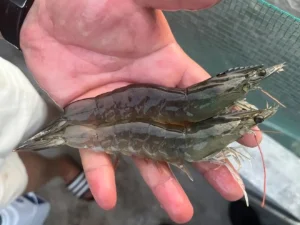
A processor using a 3.5% STPP soak achieved 6–10% yield increase and reduced drip loss, owing to enhanced protein hydration and chelation effects.
Case 2: Ceramic Slurry Stability with SHMP
SHMP improved slurry flowability and reduced viscosity, lowering milling energy usage and improving casting performance.
Case 3: Emulsified Meat Production with TSPP
TSPP increased protein solubility and emulsified fat, resulting in firmer texture and reduced cooking losses.
10. Technical Q&A for Formulators
Why does STPP provide stronger WHC than SHMP?
STPP’s chain length and alkalinity swell proteins and bind water, while SHMP primarily disperses particles without enhancing hydration.
Can STPP and SHMP be blended?
Yes. Many formulations use SHMP for dispersion and STPP for buffering and WHC, achieving a balanced system.
Why is TSPP preferred in high-protein systems?
Its high pH improves protein solubility and fat emulsification—especially useful in meat emulsions.
How does water hardness affect phosphate choice?
High hardness favors SHMP due to its superior sequestration capability.
11. Quick Selection Guide
| Requirement | Best Choice | Reason |
|---|---|---|
| Strong dispersion / stabilization | SHMP | Highest sequestration and suspension |
| Water-holding (meat/seafood) | STPP | Best WHC and hydration |
| High alkalinity for protein reaction | TSPP | Strongest pH effect |
| Detergent builder | STPP | Balanced chelation and buffering |
| Ceramic slurry control | SHMP | Superior viscosity control |
| Meat emulsification | TSPP | Improves protein solubility |
Conclusion
STPP, SHMP, and TSPP each offer unique performance advantages, making them indispensable across food processing, cleaning formulations, ceramics, and industrial applications. By understanding their structural and functional differences, formulators can select the most effective phosphate for their specific needs, ensuring optimal performance and cost efficiency.
FAQ
What is the main difference between STPP and SHMP?
STPP improves water-holding and buffering, while SHMP offers superior dispersion and metal-ion sequestration.
Is TSPP suitable for food applications?
Yes. It is widely used for emulsification and protein modification in meats and dairy systems.
Which phosphate is best for detergents?
STPP is the primary builder; SHMP is used for high-performance dispersion in premium detergents.
Can these phosphates be substituted for one another?
Only partially—each has distinct chemical behaviors suitable for different applications.