
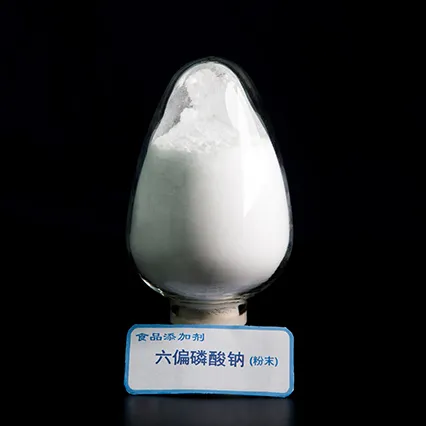
Sodium hexametaphosphate (SHMP) is a multifunctional condensed phosphate with strong chelating and dispersing properties. It is widely used in food processing, water treatment, ceramics, metal processing, and other industrial applications where control of metal ions, scale, and rheology is important. This guide summarizes the chemistry, specifications, major functions, and application areas of SHMP for formulators and buyers.
Chemistry and Structure of SHMP
Commercial SHMP is a mixture of polymeric sodium phosphates produced by controlled thermal condensation of sodium dihydrogen phosphate or related precursors. It is often described by the approximate formula (NaPO3)n, where n represents the average chain length.
SHMP is typically supplied as a white granular or powdered product. Key characteristics include:
- High water solubility at ambient temperatures.
- Strong ability to complex calcium, magnesium and certain heavy metals.
- Dispersing and deflocculating action in suspensions and slurries.
- Mildly acidic to neutral pH in solution, depending on grade and concentration.
Food-Grade vs Industrial-Grade SHMP
SHMP is available in grades tailored for food use and industrial applications.
Food-Grade SHMP
Food-grade SHMP is purified and controlled for impurity levels, meeting specific standards for heavy metals and other contaminants. It is used at low dosages in foods such as:
- Meat and poultry products, to aid water retention and protein stabilization.
- Seafood and surimi, to help maintain texture and reduce drip loss.
- Dairy and beverage systems, to support mineral balance and clarity.
For more detail, see our food grade sodium hexametaphosphate page and our article on SHMP application in the food industry.
Industrial-Grade SHMP
Industrial-grade SHMP is designed for technical uses such as ceramics, water treatment, and cleaning formulations. Performance criteria include chelating strength, dispersing efficiency and compatibility with other formulation components. Typical application areas include:
- Ceramic slips, glazes and refractories.
- Water treatment and scale control programs.
- Industrial detergents and cleaning products.
- Metal treatment and surface preparation.
SHMP is one of the key products featured in our industrial phosphates and chemicals overview.
Key Functional Properties of SHMP
SHMP is valued for several core functions:
- Chelation of metal ions – binds calcium, magnesium and some heavy metals, helping control hardness and prevent scale.
- Dispersing agent – helps separate particles and reduce viscosity in slurries, suspensions and coatings.
- Scale inhibition – reduces precipitation of insoluble salts in water systems.
- Stabilization – contributes to stability of emulsions, suspensions and certain food systems.
These properties make SHMP a versatile additive in both food and industrial formulations where water chemistry and particle interactions are critical.
SHMP in Food Applications
In food processing, SHMP is generally used at low levels in combination with other phosphates.
Meat, Poultry and Seafood
SHMP helps stabilize proteins and bind metal ions that may negatively affect texture or color. It is sometimes used together with STPP and pyrophosphates to balance water-holding capacity, texture and ionic strength.
Dairy and Beverage Systems
In dairy powders, processed cheese and certain beverages, SHMP can help:
- Control mineral balance and prevent sedimentation.
- Improve clarity in beverages with added minerals.
- Support heat stability in UHT or sterilized products.
Its strong chelating function requires careful dosage and coordination with other ingredients.
SHMP in Ceramics and Refractories
In ceramic production, SHMP is widely used as a deflocculant and dispersant in body slips and glazes. It helps:
- Reduce viscosity and improve flow of ceramic slurries.
- Allow higher solids content at manageable viscosity.
- Support better casting and forming behavior.
- Improve stability during storage and circulation.
Additional details on ceramic use can be found in our article on sodium hexametaphosphate in ceramics.
SHMP in Water Treatment and Metal Processing
In water treatment, SHMP is used to help control scale and corrosion by binding metal ions and interfering with crystal growth. In metal processing, it can support cleaning, conditioning and surface preparation by dispersing contaminants and modifying metal ion behavior.
Specifications and Quality Parameters
When specifying SHMP, important parameters include:
- P2O5 content – correlated with active phosphate content.
- Insoluble matter – must be low, especially in high-purity applications.
- pH of solution – affects compatibility in food and industrial systems.
- Iron and heavy metals – controlled tightly in food-grade products.
- Bulk density and particle size – influence handling, dissolution rate and dusting.
Obtaining COAs and technical data sheets from suppliers is essential for matching SHMP grades to application needs.
Handling and Storage
SHMP should be stored in a dry, cool and well-ventilated area. It is hygroscopic and can absorb moisture, leading to caking or reduced flowability. Good practice includes:
- Keeping bags sealed when not in use.
- Minimizing exposure to humid environments.
- Implementing dust control measures where necessary.
Under proper storage conditions, SHMP maintains its functional properties for extended periods.
Working with Goway Chemical on SHMP
Goway Chemical supplies both food-grade and industrial-grade SHMP for global customers. We support applications in meat and seafood processing, beverages, ceramics, water treatment and detergents. Our team can help you select suitable grades and define appropriate dosage ranges based on your specific formulations.
Frequently Asked Questions
What is the main difference between SHMP and STPP?
Both are condensed phosphates, but SHMP is generally stronger in chelation and dispersion, while STPP is a classic builder and water softener. The best choice depends on whether metal ion control, dispersion or general building is the primary need.
Can SHMP be used in both food and industrial applications?
Yes, but different grades are supplied for food and industrial use. Food applications require food-grade SHMP produced under strict quality standards, whereas industrial SHMP is used in ceramics, water treatment and cleaning products.
How do I choose the correct SHMP dosage?
There is no single dosage for all cases. Trials are required, taking into account raw material properties, process conditions and interaction with other components. Suppliers can provide starting ranges based on similar applications.
Is SHMP safe for food applications?
When produced to food-grade standards and used within approved regulatory limits, SHMP is considered safe for its intended technological functions. Overall phosphate intake should be managed according to nutrition guidelines.
